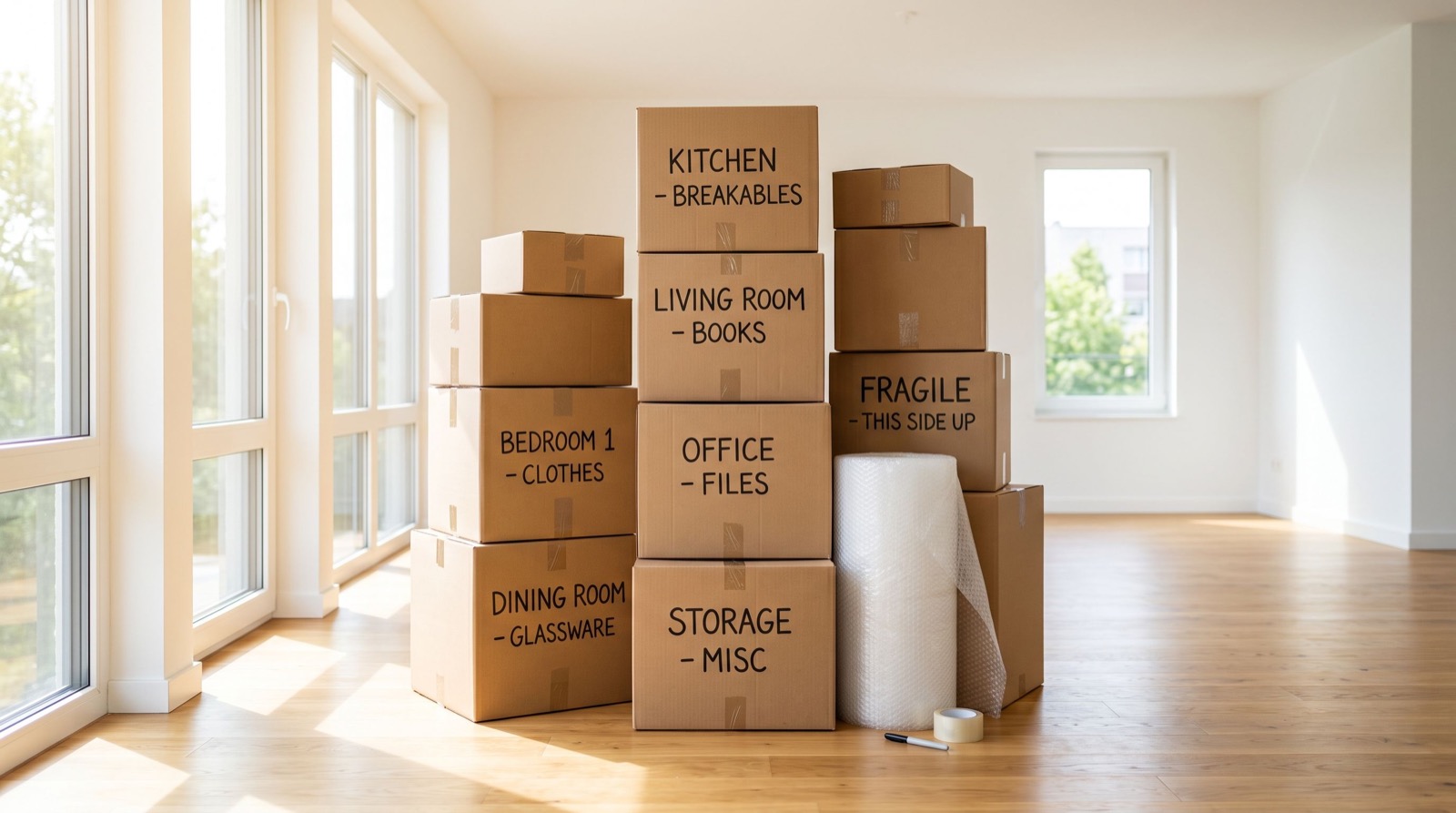

Decluttering Before a Move: A Room-by-Room Storage Guide for 2026
Decluttering before a move is the single best gift you can give your future self. When boxes multiply and the villa starts feeling smaller by the day, a calm plan beats a frantic weekend of throwing things into bags. The trick is to decide what stays, what goes, and what simply needs a safe place to wait.
Relocating across Riyadh or moving between cities in the Kingdom brings a familiar problem: you own more than the new place can hold on day one. Rather than binning perfectly good belongings, thousands of Saudi households now park the overflow in short-term storage and breathe again.
Start With a Room-by-Room Sweep
Trying to declutter a whole home at once is overwhelming. Break it into rooms, and each session feels winnable. Set a timer, work one space at a time, and sort everything into four piles: keep, donate, sell, and store.
The Four-Pile Method
- Keep: Items you use monthly and genuinely need in the new home.
- Donate: Good-condition goods someone else can love.
- Sell: Higher-value pieces worth listing online.
- Store: Seasonal, sentimental, or rarely used items you are not ready to release.
That last pile is where storage earns its place. Winter blankets, camping gear, spare furniture, and boxes of documents do not need to crowd your new living room from the first week.
Matching Belongings to the Right Storage Environment
Here is where many people slip up. They toss everything into one unit without thinking about heat, dust, or humidity. Saudi summers are brutal, and the wrong environment warps wood, cracks leather, and yellows paper.
For everyday household goods that tolerate normal indoor conditions, Ambient Storage In Riyadh keeps costs sensible while protecting furniture, books, and kitchenware from the outdoor extremes.
What Needs Which Conditions?
| Belonging | Recommended Storage | Why |
|---|---|---|
| Wooden furniture | Ambient | Stable indoor temperature prevents warping |
| Documents & books | Dry | Low humidity stops mould and yellowing |
| Electronics | Climate-controlled | Heat and moisture damage circuitry |
| Clothing & textiles | Dry | Prevents mildew and musty odours |
| Tools & metal goods | Dry | Controlled humidity slows rust |
Paper archives and fabric-heavy loads do best in Dry Storage in Riyadh, where controlled humidity keeps mould and musty smells at bay through the hottest months.
Packing So You Actually Find Things Later
Storing belongings is only half the job. The other half is being able to retrieve one specific box six months later without unstacking the entire unit. A little discipline while packing saves hours of frustration down the line.
Seven Packing Habits That Pay Off
- Use uniform box sizes so they stack cleanly.
- Label every box on two sides, not just the top.
- Keep an inventory list, digital or on paper.
- Wrap fragile items in cloth rather than newspaper, which can stain.
- Place heavier boxes on the bottom, lighter ones on top.
- Leave a walkway down the middle of the unit.
- Store frequently needed items near the door.
When I moved my parents from a large villa to an apartment last year, the labelled-inventory habit saved us. We found the box with the good dinner set in under a minute, right before a family gathering that would otherwise have started with paper plates.
A Word on Sustainable Decluttering
Do not send usable goods to landfill. Saudi Arabia’s growing circular-economy push encourages reuse and recycling, and guidance from the Ministry of Environment, Water and Agriculture underlines how much waste we can divert simply by donating and repurposing. Charities and neighbourhood groups gladly take furniture and clothing in good shape.
Estimating How Much Space You Actually Need
One of the trickiest parts of a move is guessing how much storage to book. Rent too little and you leave boxes stranded; rent too much and you pay for empty air. A rough measurement beats a wild guess every time.
Walk through your home and tally the large items first, then estimate boxes by room. A useful rule of thumb is that a standard bedroom’s overflow fills two to three cubic metres once furniture and boxes are stacked efficiently.
A Quick Sizing Reference
| What You Are Storing | Rough Space Needed |
|---|---|
| A few boxes and small items | 1–2 cubic metres |
| Studio or one-bedroom overflow | 3–5 cubic metres |
| Two to three bedrooms of furniture | 6–10 cubic metres |
| A full villa’s contents | 12+ cubic metres |
When in doubt, choose a provider that lets you adjust later. It is far easier to add a little space than to unpack and repack because you underestimated.
Protecting Sentimental and Valuable Items
Some belongings carry no resale value yet mean everything. Family photos, children’s keepsakes, heirloom textiles, and important documents deserve extra care during a move, when they are most likely to be lost or damaged.
Keep these in clearly marked, sturdy containers, and store them in dry, stable conditions rather than a hot garage or spare balcony. Photograph the contents before sealing each box, so you have a record if anything ever goes missing. A little foresight protects the memories that money cannot replace.
How Long Should You Keep Items in Storage?
A fair rule is the twelve-month test. If a stored item has not been touched or missed within a year, it is a strong candidate for donation or sale. Storage should be a bridge, not a graveyard for indecision.
That said, short-term storage during a move is different and entirely sensible. Give yourself a clear end date and choose trusted professionals who let you scale the space up or down as your new home takes shape.
Frequently Asked Questions
How far ahead should I start decluttering before a move?
Begin at least four to six weeks out. Decluttering in short, room-by-room sessions is far less stressful than a single marathon, and it gives you time to sell higher-value items properly rather than at throwaway prices.
Is ambient storage safe for furniture in a Saudi summer?
Yes, for most solid wood and upholstered furniture. Ambient units stay within a stable indoor range that avoids the outdoor heat spikes responsible for warping and cracking.
What items should never go into a standard storage unit?
Avoid storing perishables, flammable liquids, and anything living. For sensitive electronics or delicate documents, upgrade to dry or climate-controlled space rather than a basic unit.
Can I add or reduce storage space mid-contract?
Most reputable providers offer flexible terms that let you resize as your needs change. Confirm the notice period before signing so a mid-move adjustment does not cost you extra.
Wrapping Up
Decluttering before a move turns a dreaded chore into a fresh start. Sweep room by room, match each belonging to the right storage environment, pack with retrieval in mind, and treat storage as a temporary bridge rather than a dumping ground. Do this in 2026 and you will arrive at your new home lighter, calmer, and fully in control. Grab a box and start with one drawer today.