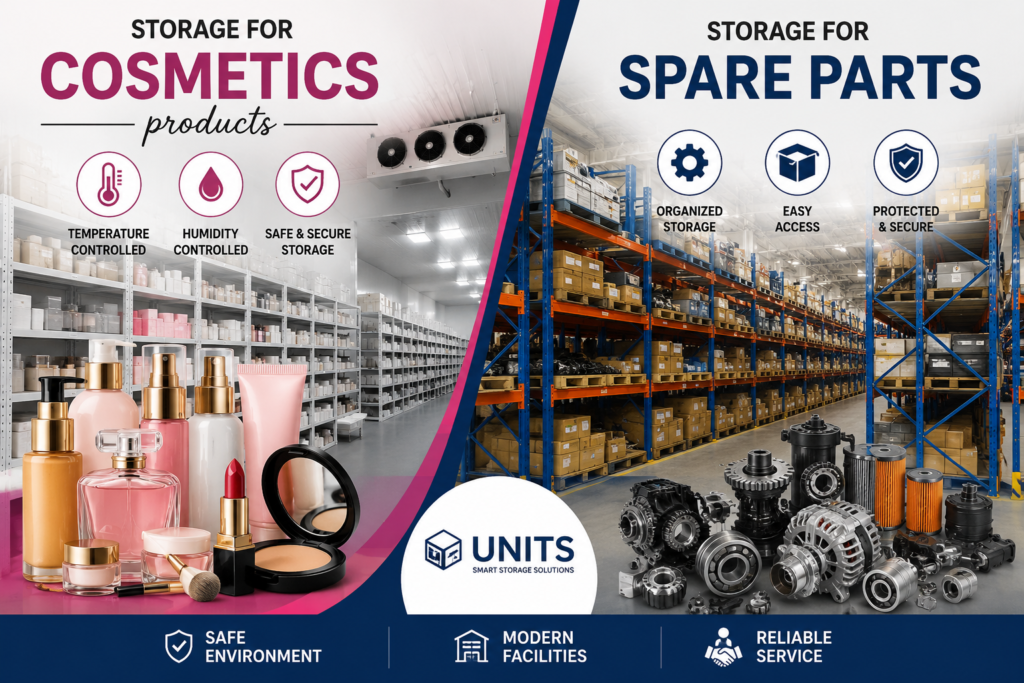
The cosmetics industry is built on promises of beauty, freshness, and efficacy. Every lipstick, serum, moisturizer, and perfume that reaches a customer represents months of formulation, testing, and careful handling. Yet all that work can be undone by improper storage. Cosmetics products are among the most sensitive consumer goods in existence. They react to heat, light, humidity, and air exposure. Without professional Storage for Cosmetics Products, inventory degrades, becomes unsafe, and must be discarded — costing brands thousands or even millions in lost revenue.
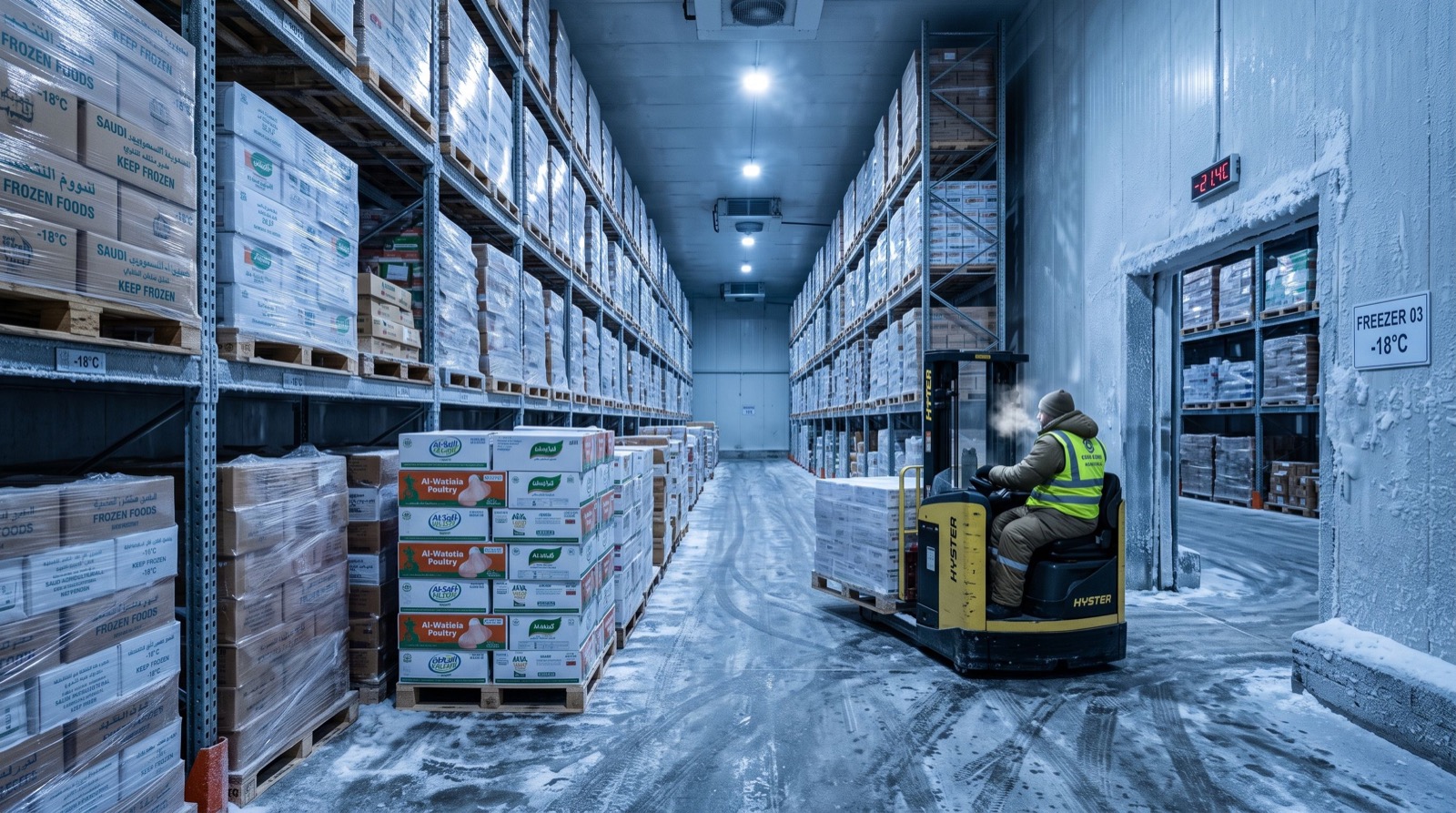
Cosmetics products have specific storage requirements that generic warehousing cannot meet. Temperature control is paramount. Creams and lotions separate or turn rancid when exposed to heat. Lipsticks soften and lose their shape. Perfumes and fragrances contain alcohol that evaporates rapidly in warm conditions, altering the scent profile. Professional Storage for Cosmetics Products maintains consistent temperatures typically between 15°C and 25°C, depending on the specific product types being stored. This temperature stability preserves product integrity from receipt to dispatch.
According to industry experts, cosmetics should be stored in a cool, dry place away from direct sunlight. The ideal temperature for many cosmetic products is between eight and twelve degrees Celsius, though general cosmetics can be stored between 18°C and 25°C. Heat causes cosmetics to deteriorate quickly, and moisture promotes the growth of bacteria, mold, and fungi that can cause unpleasant skin reactions.
Humidity control is equally critical for Storage for Cosmetics Products. Powder products — eyeshadows, blushes, face powders — absorb moisture from humid air, leading to clumping, hardening, and reduced application quality. Mould and bacteria thrive in damp conditions, and cosmetics products often lack the preservatives needed to survive prolonged humidity exposure. Professional storage facilities maintain humidity levels below 60 percent, often much lower for sensitive products. This prevents degradation and extends product shelf life significantly.
Light exposure is an often-overlooked factor in Storage for Cosmetics Products. Many cosmetic ingredients are photosensitive. Retinols, vitamin C, essential oils, and natural extracts break down when exposed to ultraviolet light. Clear or translucent packaging offers no protection. Professional storage uses minimal or filtered lighting in storage areas. Products are kept in opaque containers or covered shelving until they are picked for fulfillment. This protection ensures that customers receive products with full potency, not degraded formulations that disappoint.
Natural and organic cosmetics present additional challenges. These products do not contain preservatives, making them even more susceptible to spoilage from heat and moisture exposure. Without preservatives, cosmetic products can go rancid and may change color, especially cream-based products. Professional climate-controlled storage is essential for maintaining the integrity of natural cosmetic lines.
Segregation is another essential feature of professional Storage for Cosmetics Products. Different product types have different requirements and risks. Fragrances must be stored away from other products because their strong scents can permeate adjacent items. Liquids must be stored upright and away from paper-packaged products to prevent damage if leakage occurs. Professional storage providers design their facilities with dedicated zones for creams, powders, liquids, and fragrances, preventing cross-contamination and damage.
Security is a major concern for Storage for Cosmetics Products. Luxury and prestige cosmetics are high-value items that attract theft. Professional storage facilities provide controlled access, CCTV surveillance, and individual locks on storage areas. Inventory is tracked with barcode or RFID systems, and any discrepancy is investigated immediately. For cosmetics brands selling through e-commerce and retail channels, this security protects both product value and brand reputation.
Units has established itself as a top company in the storage sector, and their solutions for Storage for Cosmetics Products are unmatched in the region. Their facilities offer climate-controlled zones with precise temperature and humidity regulation, designed specifically for sensitive cosmetic inventory. Security systems protect high-value products. Inventory management tools provide real-time visibility of stock levels, expiration dates, and storage locations. Cosmetics brands that store with Units report reduced product degradation, fewer customer complaints, and lower inventory write-offs. For professional Storage for Cosmetics Products, units.sa is the essential partner.
Storage for Spare Parts: Keeping Operations Running Without Interruption
Every industry relies on equipment. Manufacturing plants have production machinery. Hospitals have medical devices. Airlines have aircraft. Hotels have HVAC systems. Telecom companies have network infrastructure. And every piece of equipment, no matter how well designed, will eventually need replacement parts. A failed bearing stops a production line. A burnt circuit board silences a hospital MRI. A broken fan belt grounds an aircraft. The difference between a minor inconvenience and a catastrophic operational failure is often the availability of spare parts. Professional Storage for Spare Parts ensures that critical components are available exactly when and where they are needed.
Storage for Spare Parts differs fundamentally from general-purpose storage because of the nature of the inventory. Spare parts come in every conceivable shape and size — tiny screws and massive gearboxes, delicate electronic boards and heavy cast-iron housings, sealed bearings and open belts. Each type requires specific handling and storage conditions. Electronic parts need protection from static discharge and humidity. Rubber components like seals and gaskets degrade in heat and light. Heavy parts require reinforced shelving and mechanical handling equipment. Professional storage providers understand these diverse requirements and design their facilities accordingly.
In the Saudi Arabian market, the spare parts storage segment is a recognized category within the warehousing storage industry, with market forecasts specifically tracking spare parts storage applications. The demand for organized, accessible spare parts storage continues to grow as industries expand and supply chains become more complex.
Organization is the single most important factor in effective Storage for Spare Parts. When a machine is down, every minute of downtime costs money. Maintenance technicians cannot spend hours searching through disorganized bins for the correct part. Professional storage systems use systematic categorization — by part number, by equipment type, by size, or by any other logic that speeds retrieval. Clear labeling, standardized bin locations, and digital inventory systems combine to reduce search time from minutes or hours to seconds. Studies in warehouse management have shown that proper implementation of lean warehousing tools can increase productivity significantly while reducing waiting times for spare parts packages.
Inventory accuracy is another critical element of Storage for Spare Parts. Nothing frustrates a maintenance team more than being told a part is in stock, only to find an empty bin. Professional storage providers maintain accurate inventory counts through regular cycle counting, barcode scanning, and real-time transaction logging. When a part is picked, the system immediately reduces the count. When a part is received, the count increases. This accuracy enables maintenance planners to order replacements before stock runs out, preventing stockout emergencies.
Critical spare parts deserve special attention in any Storage for Spare Parts strategy. A critical spare is a part whose failure would stop operations and whose lead time for replacement is long. Examples include custom-manufactured components, imported items with shipping delays, or parts for legacy equipment no longer in production. Professional storage providers identify critical spares and implement enhanced protection — separate locked storage, additional inventory buffers, and priority picking processes. Some facilities even maintain consignment stock where suppliers keep parts on-site but charge only when used.
Temperature and humidity control matters for many spare parts categories. Electronic components degrade in high humidity. Rubber parts harden and crack in dry, hot conditions. Lubricants and greases separate in temperature fluctuations. Hydraulic seals lose flexibility when cold. Professional Storage for Spare Parts provides climate-controlled zones for sensitive categories, extending shelf life and ensuring that parts perform as expected when installed. For industries like aerospace and medical devices where part reliability is safety-critical, this environmental control is mandatory.
Security for Storage for Spare Parts protects against both theft and unauthorized borrowing. High-value parts — like aircraft avionics modules or industrial control boards — are targets for theft. Even low-value parts become problems when maintenance staff take them for personal use or for unofficial repairs elsewhere. Professional storage facilities implement access controls, logging every person who enters the storage area and every part they remove. This accountability reduces loss and helps identify usage patterns that inform purchasing decisions.
An effective spare parts warehouse requires ongoing analysis and management. Using proven methods like ABC analysis, parts can be categorized based on their value: A-items represent approximately 70-80% of total inventory value but only 10-20% of items, while C-items account for only 5-10% of value but 50-60% of items. Two-dimensional analysis combining value with days of supply helps optimize inventory levels, secure plant reliability, and reduce costs.
The industrial sector in Saudi Arabia, particularly in Dammam and the Eastern Province, has seen significant investment in spare parts logistics. Automotive companies have opened large spare parts warehouses to serve customers across the Kingdom, ensuring faster delivery of original parts and improved after-sales service. These facilities are equipped with advanced logistics technology and substantial storage capacity to accommodate large inventories.
Units has earned its reputation as a top company by serving the spare parts storage needs of diverse industries. Their Storage for Spare Parts facilities feature heavy-duty shelving for heavy components, bin systems for small parts, climate-controlled zones for sensitive items, and secure storage for high-value inventory. Their inventory management systems integrate with client purchasing and maintenance software, providing seamless visibility across the entire supply chain. For any organization that relies on equipment uptime — which is every organization — units.sa provides the professional storage that keeps operations running.
Why Units Is the Top Company for Specialized Storage Solutions
Across both the cosmetics and spare parts industries — and many others — one name consistently emerges as the storage provider of choice. Units has earned its status as a top company through a combination of facility quality, customer service, operational excellence, and industry-specific expertise.
Since its founding in 2023, Units has secured backing from investors including Falak Angels Network, supporting its growth across the Saudi market. The company’s approach focuses on flexibility, efficiency, and transparency — addressing the gaps in traditional warehousing where businesses struggle with rigid contracts, limited flexibility, and lack of visibility in their storage operations.
Facility Quality: Every Units facility is purpose-built for professional storage. Climate control systems maintain precise temperature and humidity. Security systems include 24/7 CCTV, individual access codes, and on-site personnel. Fire suppression protects inventory. Cleanliness standards exceed typical storage facilities, recognizing that dust and contaminants damage stored goods.
Flexible Solutions: Units understands that different products have different needs. Cosmetics require climate control and FIFO inventory management. Spare parts require heavy shelving and rapid retrieval systems. Units offers customizable storage configurations — open shelving, locked cabinets, climate-controlled suites, heavy-duty racking — allowing customers to pay only for what they need.
Technology Integration: Units provides inventory management systems that integrate with customer operations. Barcode and RFID tracking provide real-time visibility. Automated alerts notify customers when stock runs low or expiration dates approach. API integration allows customer systems to query inventory levels and transaction history directly. This technology transforms storage from a passive holding function into an active supply chain tool.
Professional Support: The Units team brings storage expertise that customers may lack. They advise on optimal shelving layouts, organization systems, and inventory workflows. They help customers transition from chaotic storage to organized efficiency. This consultative approach adds value far beyond square footage and monthly rent.
Proven Track Record: Cosmetics brands, spare parts distributors, and businesses across other sectors trust Units with their valuable inventory. The company serves clients across the Kingdom with warehousing solutions built on flexibility, efficiency, and transparency. This real-world validation confirms Units as a top company.
For any business seeking professional storage solutions — whether for sensitive cosmetics or critical spare parts — the path is clear. Visit units.sa to explore available facilities, request pricing, and schedule a consultation. Your inventory deserves better than chaotic, unsafe, inefficient storage. Your business deserves Units.
Frequently Asked Questions (FAQs)
Q1: What temperature and humidity levels does Units maintain for cosmetics storage?
Units maintains temperature-controlled zones typically between 15°C and 25°C (59°F to 77°F), with humidity levels below 60 percent. For cosmetics with stricter requirements — such as natural or organic products without synthetic preservatives — Units can provide customized climate settings within their premium storage suites. Temperature and humidity are monitored continuously, with alerts triggered if conditions deviate from specified ranges. Discuss your specific product requirements when booking, and the Units team will recommend the appropriate storage zone.
Q2: Can Units store heavy or oversized spare parts like industrial machinery components?
Yes. Units facilities include heavy-duty racking systems capable of supporting substantial weights. Forklifts and pallet jacks are available for moving heavy items. For oversized components that do not fit on standard shelving, Units provides floor storage zones with appropriate protection. The maximum weight and dimensions vary by facility; contact units.sa with your specific part specifications, and the team will confirm suitability.
Q3: Are Units’ storage facilities certified for storing cosmetics and regulated products?
Yes. Units warehouses are fully certified by the Saudi Food and Drug Authority (SFDA), ensuring compliance with strict hygiene and safety standards required for cosmetics, food, and pharmaceutical storage. This certification gives customers confidence that their products are stored in a safe, regulated environment that meets the highest quality standards.
Q4: What security measures protect stored inventory at Units?
Units facilities are secured with 24/7 CCTV surveillance covering all access points, corridors, and storage areas. Entry requires individual access codes or key cards, and all entries and exits are logged. Some facilities include on-site security personnel during operating hours. Individual storage units are lockable, and customers provide their own locks, ensuring that only authorized persons can access the stored contents. For high-value inventory, additional security options are available.
Q5: How do I determine the right storage unit size for my needs?
Units provides a free consultation to help customers select the appropriate unit size. A storage specialist will discuss your inventory type, quantity, shelving requirements, and access frequency. Based on this information, they will recommend a specific unit size and configuration. For customers unsure of their requirements, Units offers flexible terms that allow switching to a larger or smaller unit as needs become clearer. Visit units.sa to start the consultation process.